


Kimber Comp X Hunter 10mm
By: Dave Bahde
Kimber’s first production compensated 1911 puts the brakes on 10mm muzzle rise
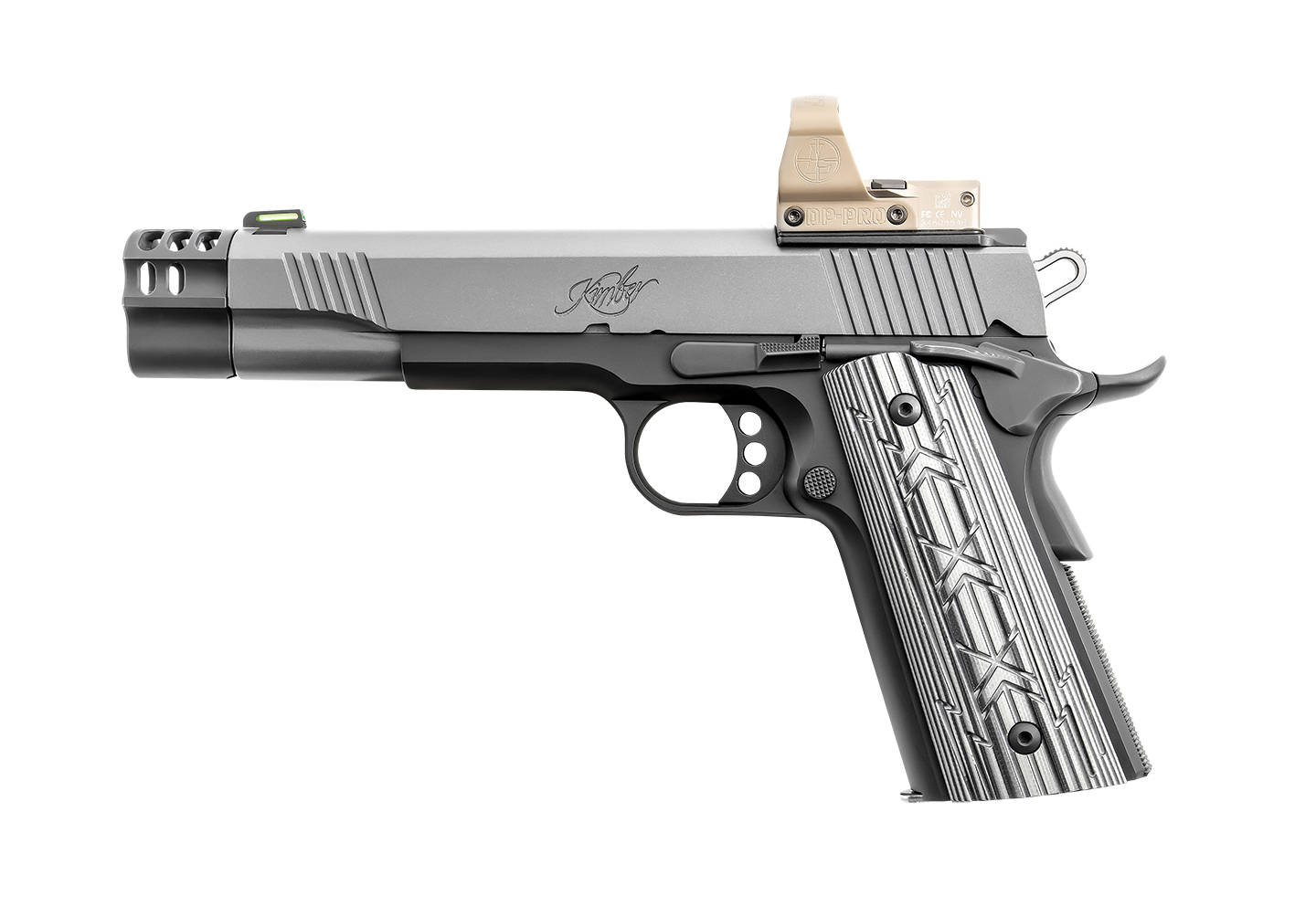
Contrary to what some experts may say, the 10mm lives, and continues to hold its line, even picking up speed in popularity. It’s just hard to argue with its versatility, and it remains one of the most prolific hunting cartridges chambered in a 1911. Another advantage of the 10mm is its ability to easily move from self-defense to game animals. Out of a 1911, it can be hard-hitting, controllable, and incredibly accurate. With an increased interest in compensated pistols, the comped 1911-chambered in 10mm may be the perfect platform for your fall-hunting season. Kimber has continued to offer some of the best 10mm 1911s on the market, and the Comp X takes the next step with its newly patented compensator.
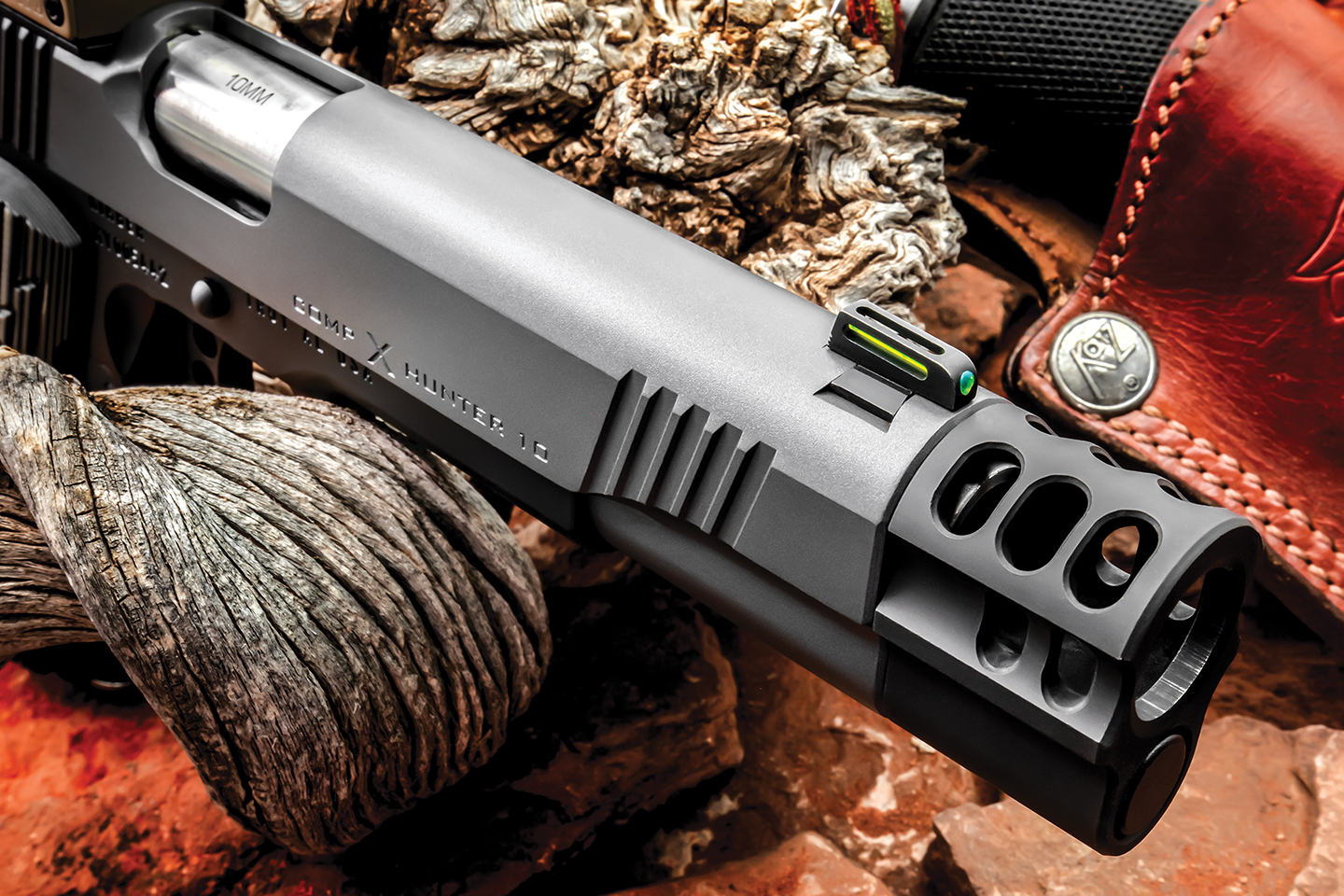
Kimber Comp X Hunter
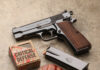
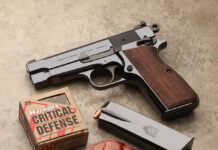
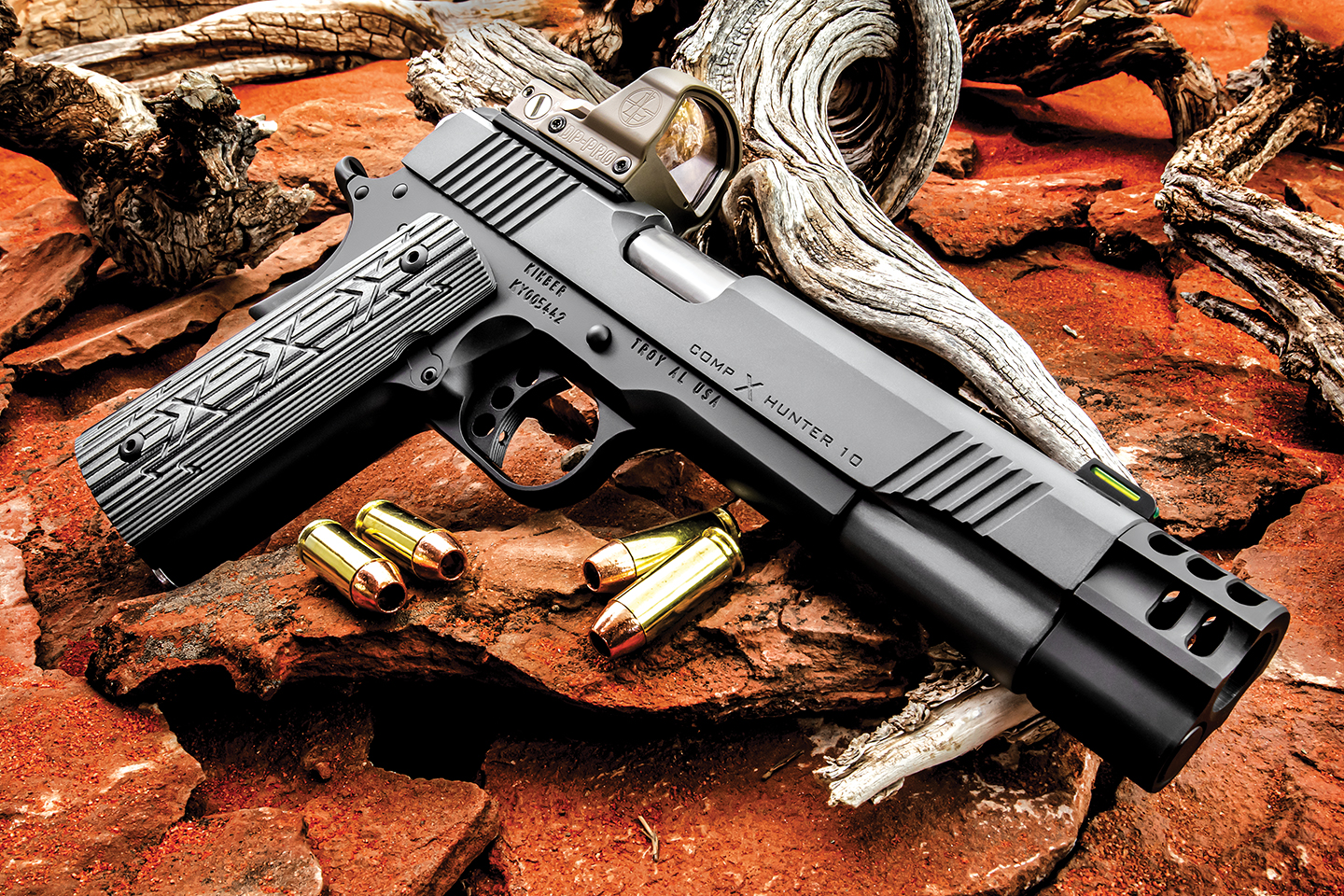
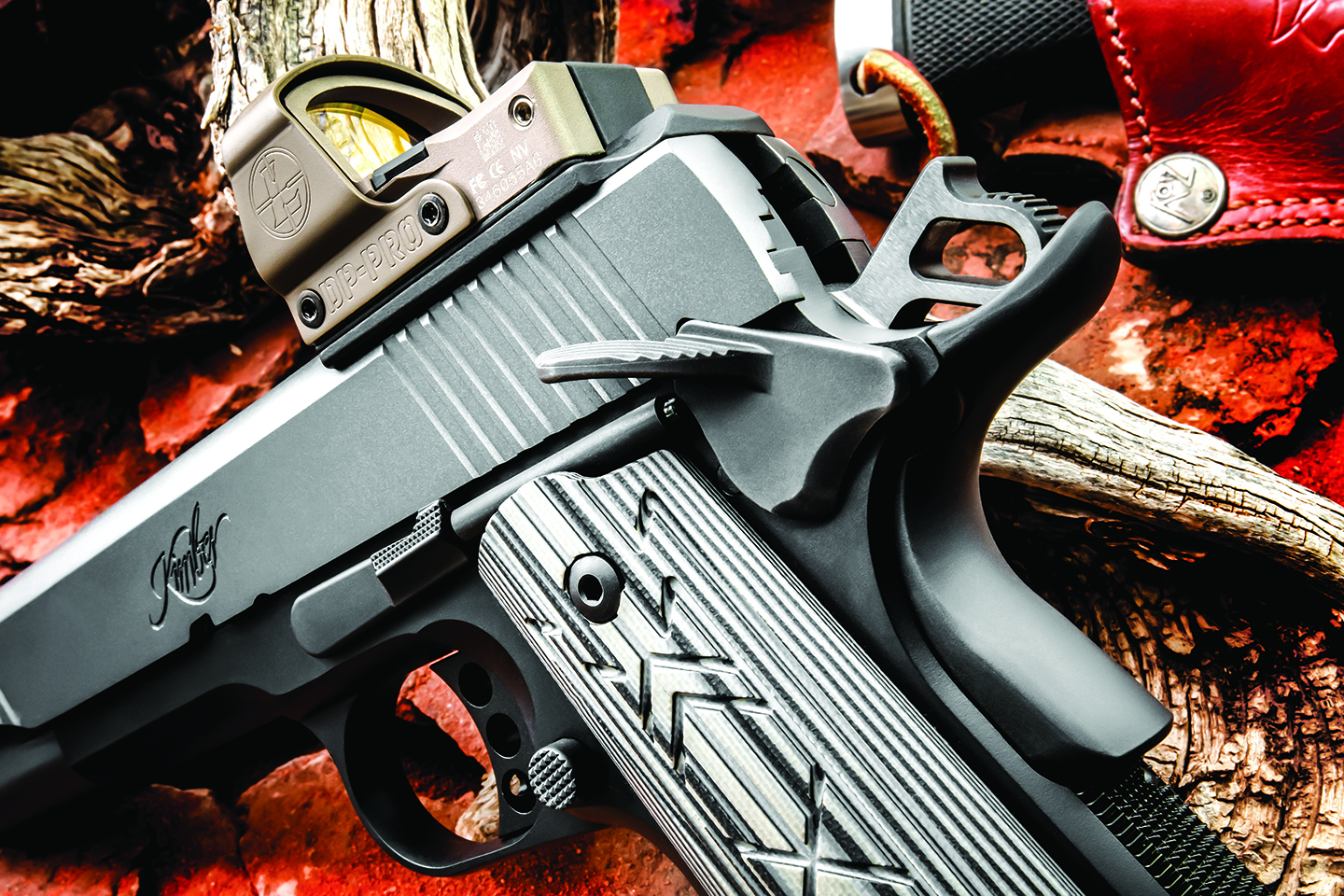
Kimber starts with their proven 1911 design, using a stainless-steel frame and slide. Featuring a patent-pending compensator, it incorporates a toolless plunger and guide rod to facilitate straightforward and easy disassembly. The barrel is also stainless steel, measuring out at five inches, plus another inch for the compensator. The compensator has six vents on top and two on each side and is attached as a barrel bushing. The slide has front and rear cocking serrations, with “Kimber” engraved on the left side and “Comp X Hunter 10” on the right. Finish is the durable Kimpro II; gray on the slide and black on the frame. The premium trigger is set to a crisp four to five pounds. My test pistol was equipped with a Leupold DeltaPoint Pro, installed with no rear sight; the front sight is a bright-green fiber optic, excellent for low-light work. Kimber’s optic-plate adapters are available for the 509T, RMSc, Docter/Noblex, and the ACRO footprints, with more to come, I am sure. The frame is adorned with VZ Bawidamann Ragnarök black/gray G10 grip panels, a serrated mainspring housing, an extended beavertail, and a smooth front strap. The Comp X Hunter shipped with one flush-fitting 8-round magazine in a Kimber Nylon case.
Range Time
The new bushing/compensator and plunger system intrigued me, so testing started with disassembly. Quite ingenious, it is truly toolless and makes the pistol remarkably easy to disassemble. Simply twist the compensator as you normally would with a barrel bushing, capture the plunger, twist back, and remove the barrel and compensator, and reinstall in reverse order. Fitment of the compensator is snug but can be removed with finger pressure; no barrel wrench required. The guide rod is factory type, using standard springs, making it pretty easy to “spring up” for the heavy loads.
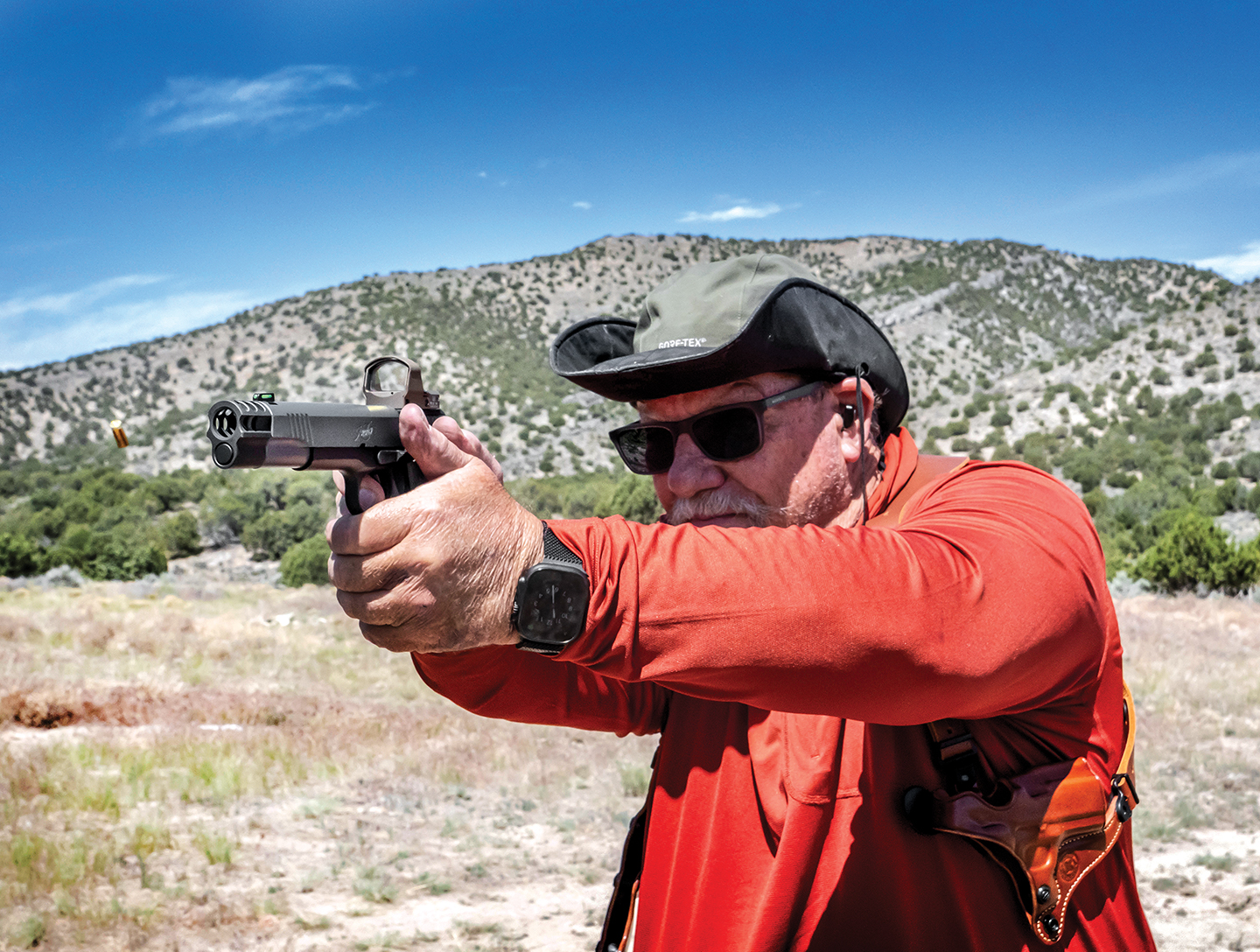
Bushing-type compensators have not always been the most useful and frequently make 10mm pistols unreliable. That was not the case with this pistol. Even my 155-grain practice loads ran like crazy; they were accurate, soft-shooting, stoppage-free, and fed with ease. I can’t even get the pistol I made this load for to do that. Shooting the Comp X side by side with a five-inch Springfield Armory 1911, you noticed a distinct difference in muzzle rise, even with the lower-octane handloads. Running Doubletap 155-grain at nearly 1,500 FPS, you really start to notice the difference. All the fast and light loads from Doubletap (135- and 125-grain at 1,600 FPS ) seemed to produce the most dramatic decrease in muzzle rise compared to uncompensated. Recoil was about the same, but it moved less for sure. It felt like I could run my handloads all day long, and I could even complete hammer pairs at five and seven yards.
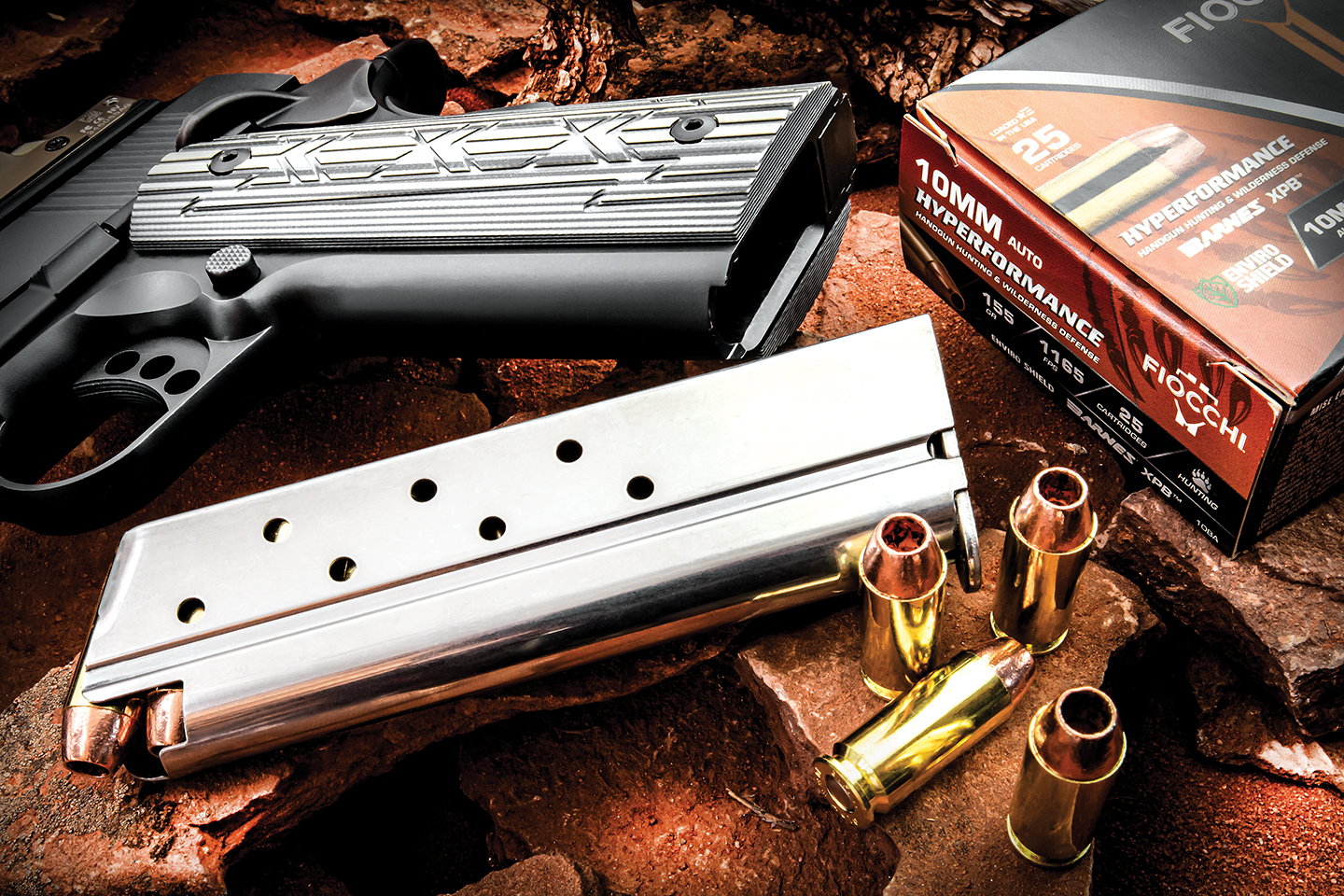
Moving to the heavier 180-grain loads, you could still feel the comp doing its job, but not as pronounced. When you get to the 200- and 230-grain solid loads, they are all very thumpy, so it’s much harder to tell, but they all ran with the factory recoil spring. It ships with a 16-pound spring; perfect for fast and light loads, but dropping in a 20-pound spring for the heavy stuff is good insurance. The factory magazine functioned properly throughout testing.
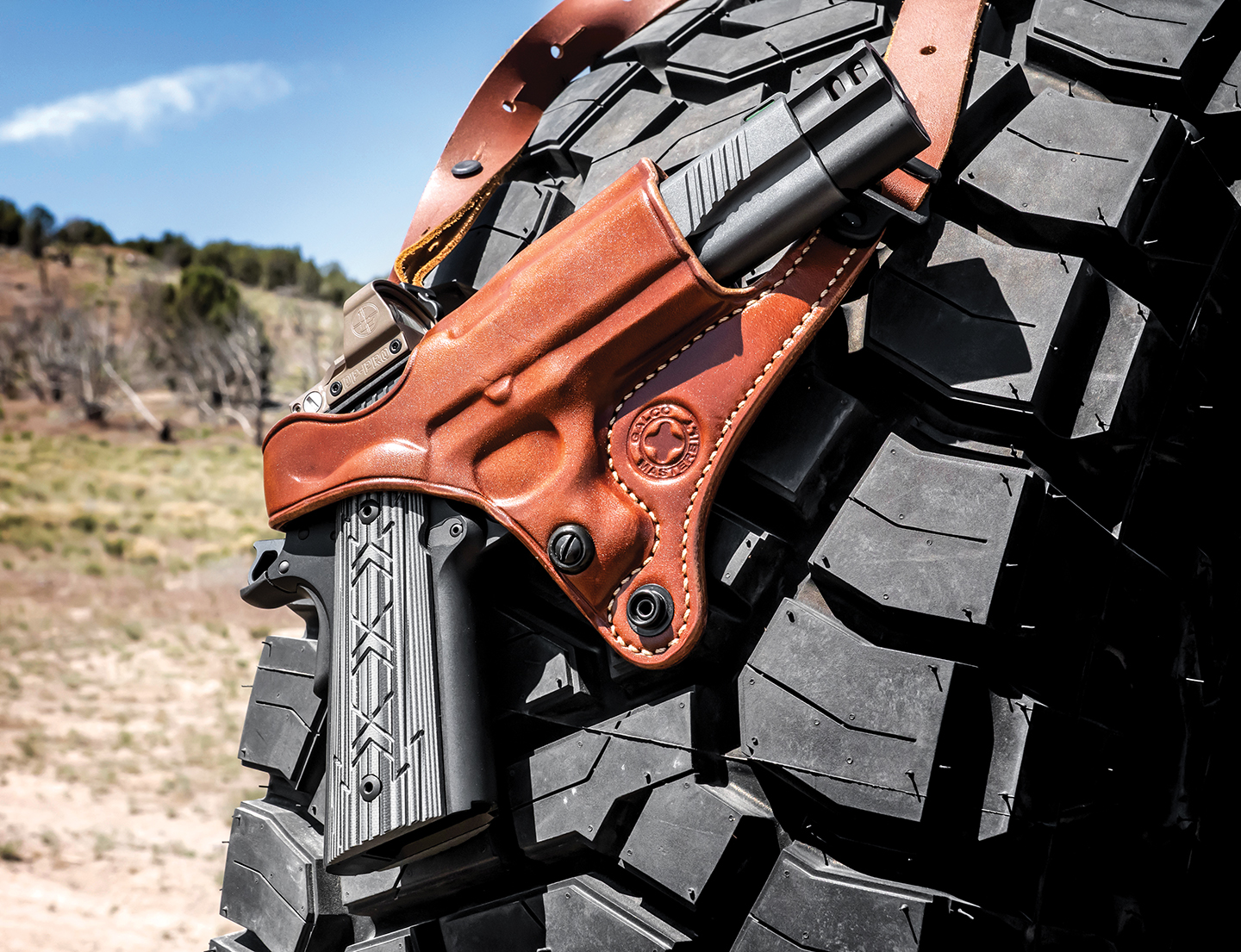
Accuracy was excellent, especially with the 135 and 155-grain loads. Lack of recoil was a significant factor for me; grouping the super-hot, heavy loads always proves more difficult. The best five-shot group I could muster was in the 1.25-inch range from 25 yards using a bag as a rest on a bench with the 155-grain Controlled Expansion JHP from Doubletap Ammunition. Most of the lighter loads were around that mark, pushing closer to 1.5 inches with the heavy loads generally with a flyer in there somewhere. Generally speaking, accuracy is excellent with the Comp X Hunter.
I would have preferred serrations or checkering on the front strap, given the potent ammo this pistol is capable of firing, but given the relatively affordable MSRP ($1,320), that’s easily forgivable. As recoil increases, my preference is aggressive stocks and checkering on a hunting pistol — it adds control at the cost of some comfort, but this is not a pistol most are going to spend hours on the range with firing heavy loads. But, in the end, it always comes down to personal preference. More aggressive grips could be easily added if you so choose.
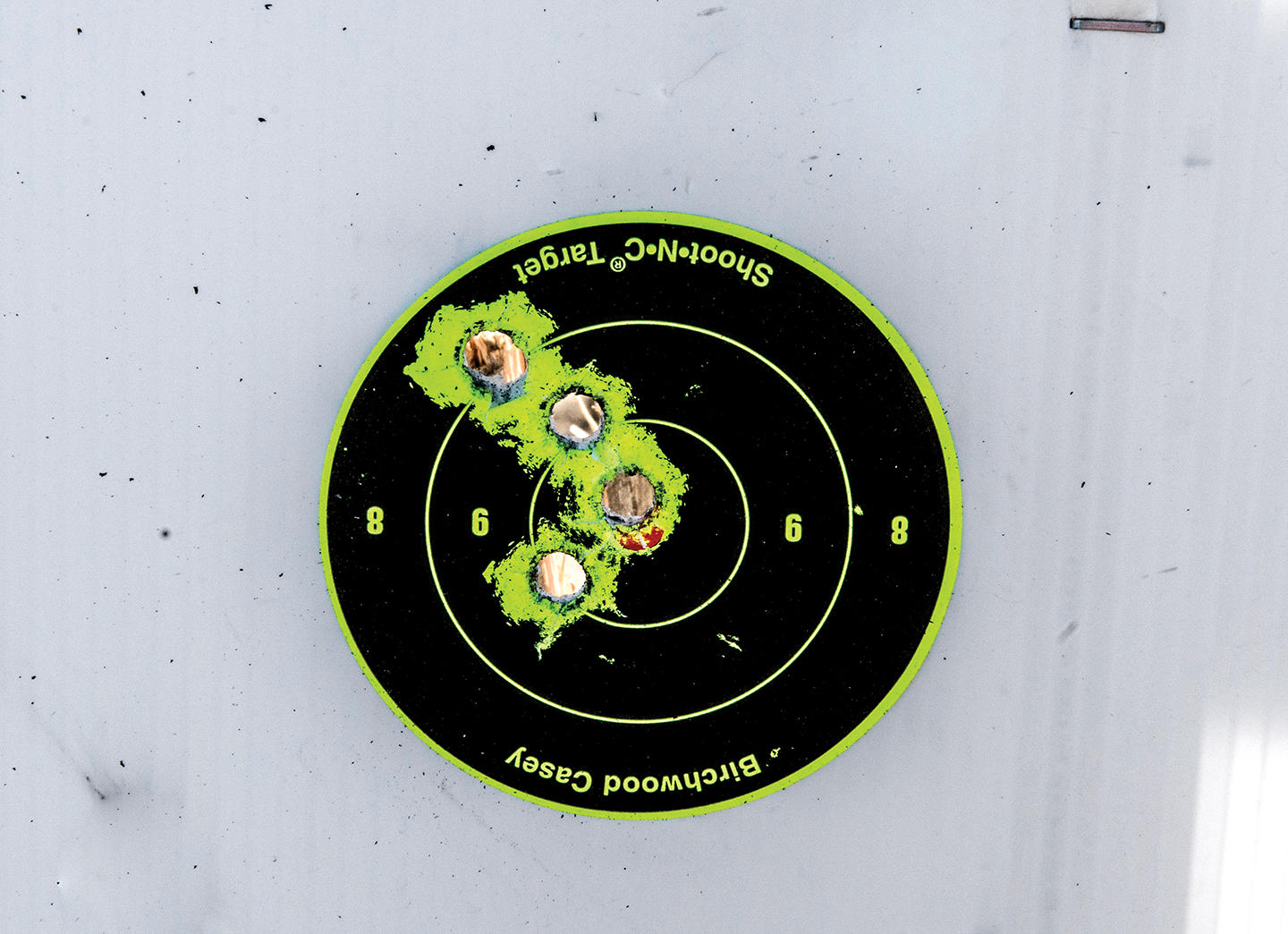
While testing another rifle, this pistol was taken into the backcountry for a two-mile hike. My long-time preference for carrying a hunting pistol like this is a shoulder holster. Galco’s Masterbilt Slabside Perfection Shoulder System was the perfect host, allowing for a couple hours of carry with no back or hip pain. The new design accommodates a non-railed pistol wearing an optic, and it locks into place and rides comfortably with two spare magazines on the other side. The Comp X Hunter also fits in my full-size 1911 holsters, so long as the bottom is open.
Final Thoughts
Compensated 10mm 1911s have always been one of those things you really like if they work. Several highly customized (read: expensive) versions have been pretty reliable, but not all. It is always a bit of a gamble with factory versions, one of the reasons many mainstream manufacturers shy away. As a production 1911 in 10mm, the Comp X Hunter has proven impressive in terms of reliability, with no malfunctions reported during testing. The fit and finish are typical Kimber, with nice colors and a striking look. The trigger was conducive to good downrange precision but wasn’t too light, a concern with harder recoiling calibers. The Leupold Delta Point was excellent. There was no rear sight with an optic mounted, but I could use the front post in a pinch. If you’re looking for a 1911 for hog or deer hunting, this one is about perfect, but it would work equally well on most game where the 10mm is appropriate. See the Comp X Hunter at your nearest dealer, or for more information, contact Kimber; Tel.: (888) 243-4522; E-mail: [email protected]; Web: www.kimberamerica.com
Specifications:
Action: Hamer-Fired SAO
Caliber: 10mm
Barrel Length: 5 inches (plus compensator)
Overall Length: 9.7 inches
Weight: 40.25 ounces
Finish: Gray and Black Kimpro II
Sights: Fiber optic front, fixed rear, optic ready
Capacity: 8+1
MSRP: $1,320