



Rock River Arms LAR-15M Rock Chuck 17 HMR
RRA cracks the code on a 17 HMR AR-style rifle, and it’s a whistle pig’s worst nightmare
Anyone familiar with AR-15 style platforms will immediately recognize the Rock River Arms brand. The Illinois-based company has been producing some of the most innovative and reliable AR rifles and pistols for both civilian and government consumers for nearly 30 years. The Rock River lineup includes offerings in all the common calibers, such as .223/5.56, 7.62×39, .308, and 300 AAC Blackout, as well as others that are less common, such as 350 Legend and 450 Bushmaster. Separate from the major caliber lineup, Rock River also has the LAR-22, its capable .22 caliber platform. However, what RRA has not had until recently is a rifle in .17 HMR (Hornady Magnum Rimfire). While plenty of bolt-action rifles are out there in .17 HMR, AR-style semis are quite rare, in part due to the engineering requirements necessary to safely allow semi-auto fire from a high-pressure, high-velocity rimfire. It took a few years, but Rock River seems to have cracked the code in this respect, and the resulting LAR-15 is very intriguing.
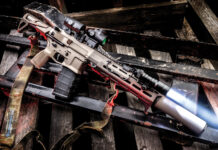
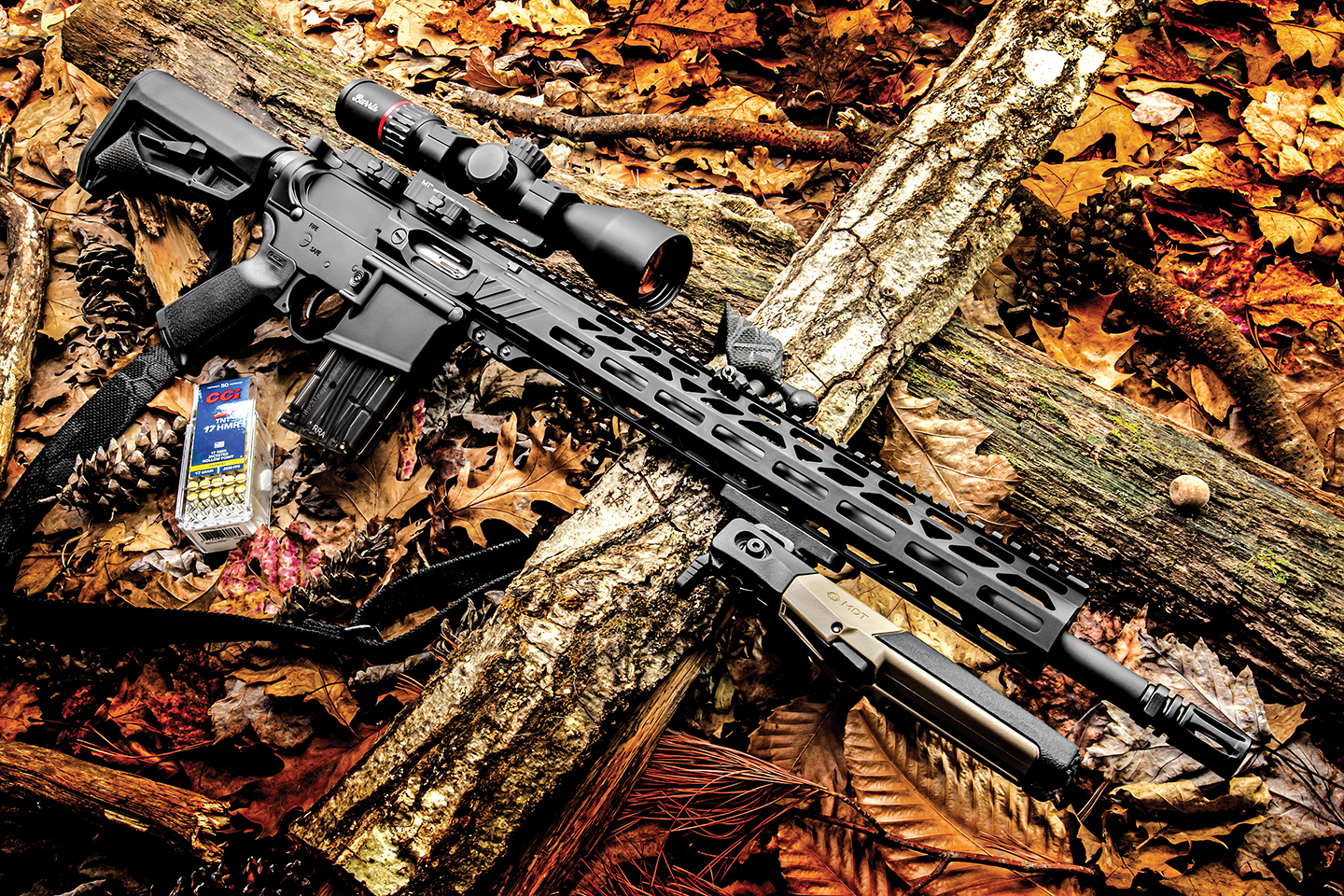
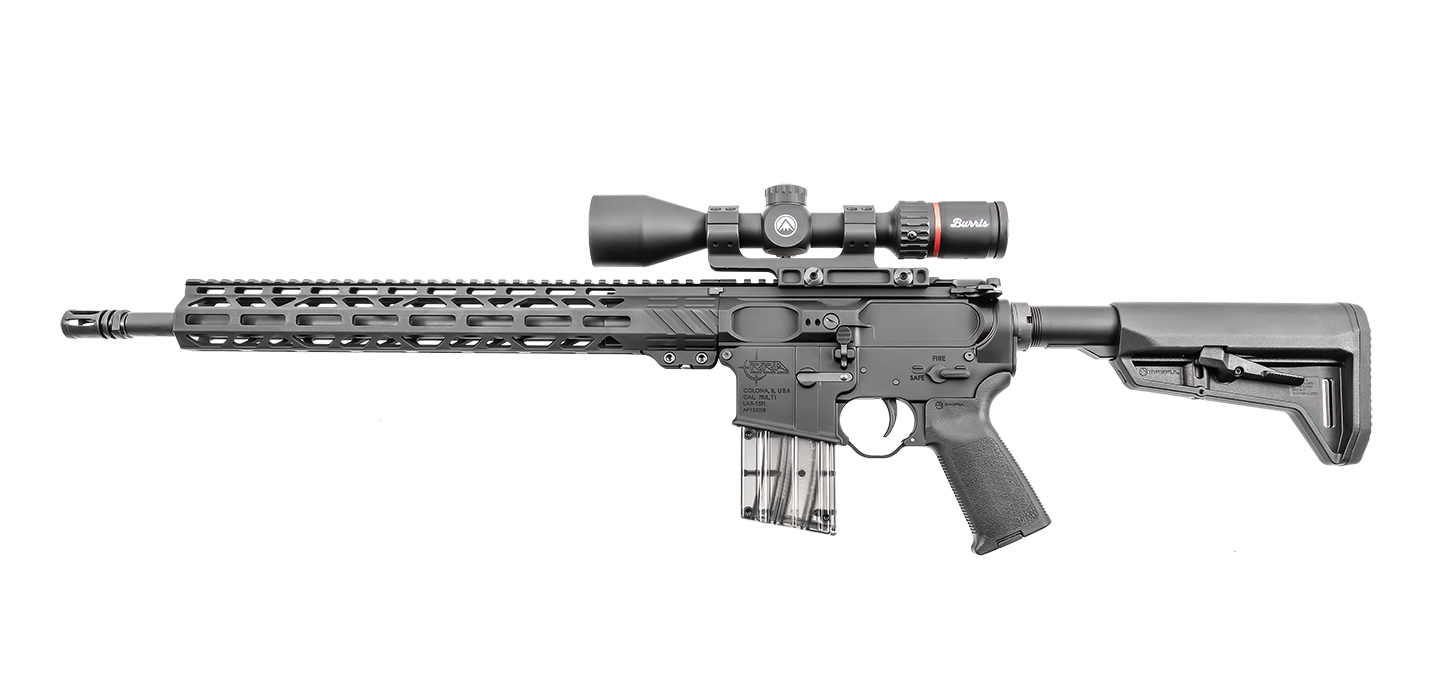
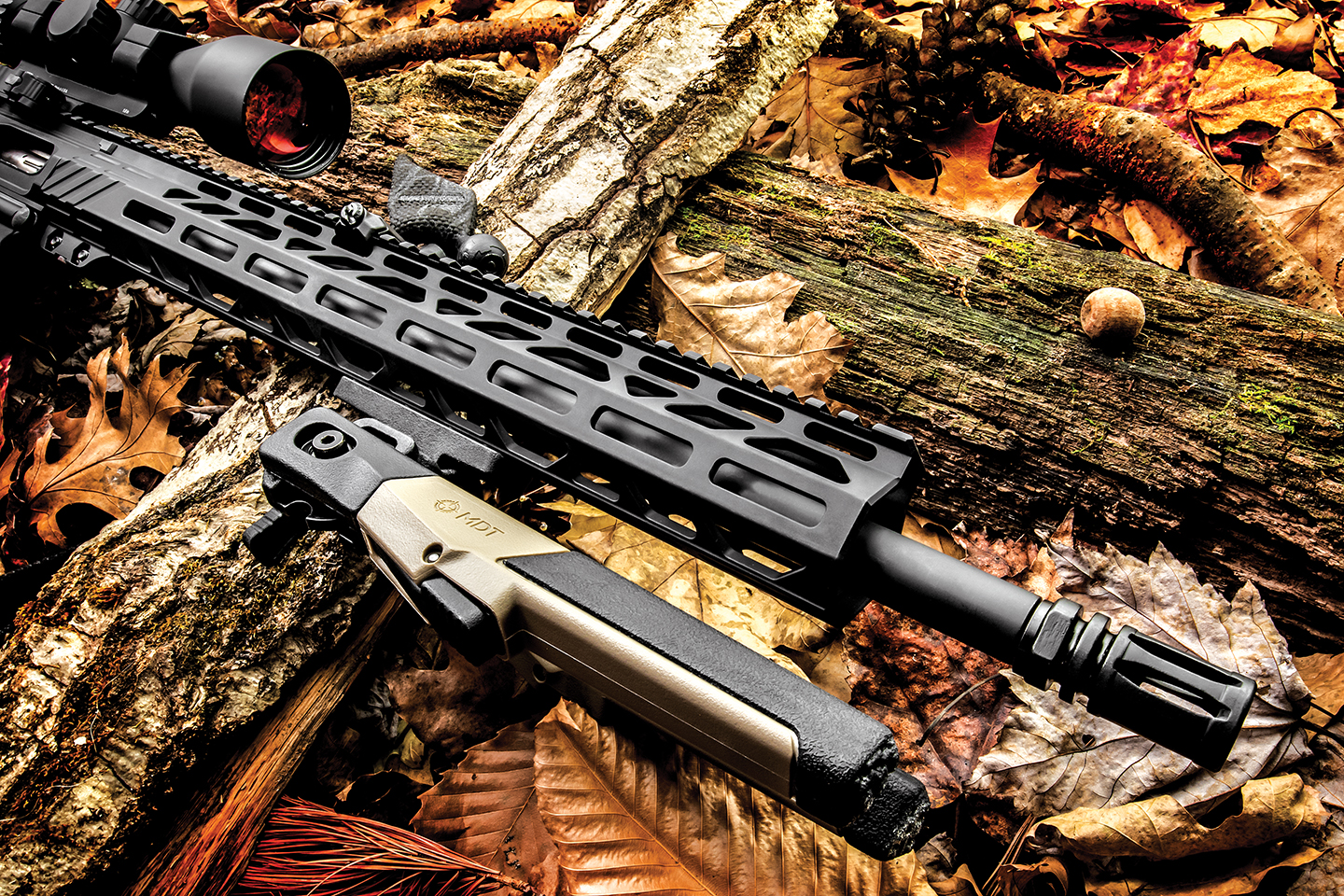
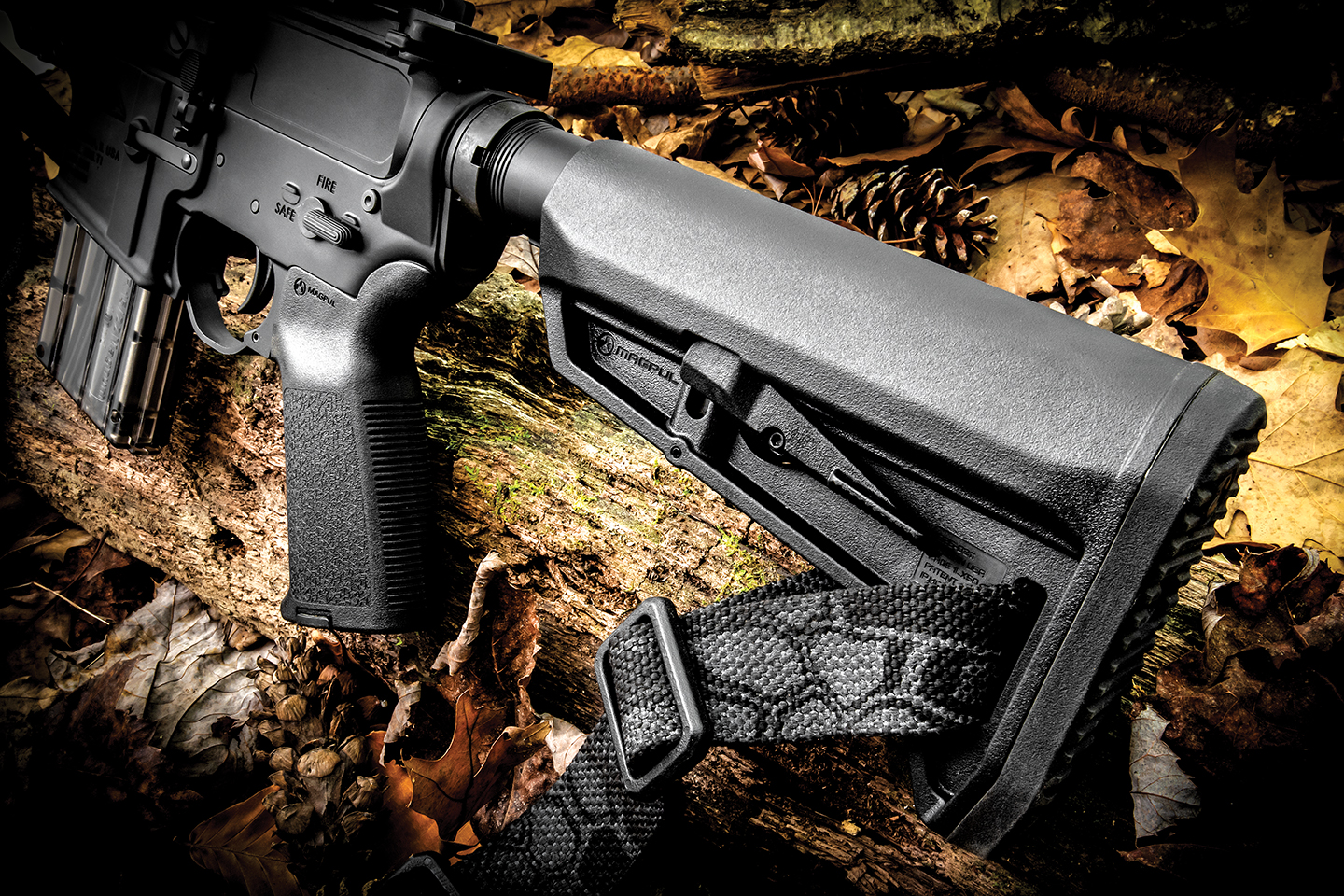
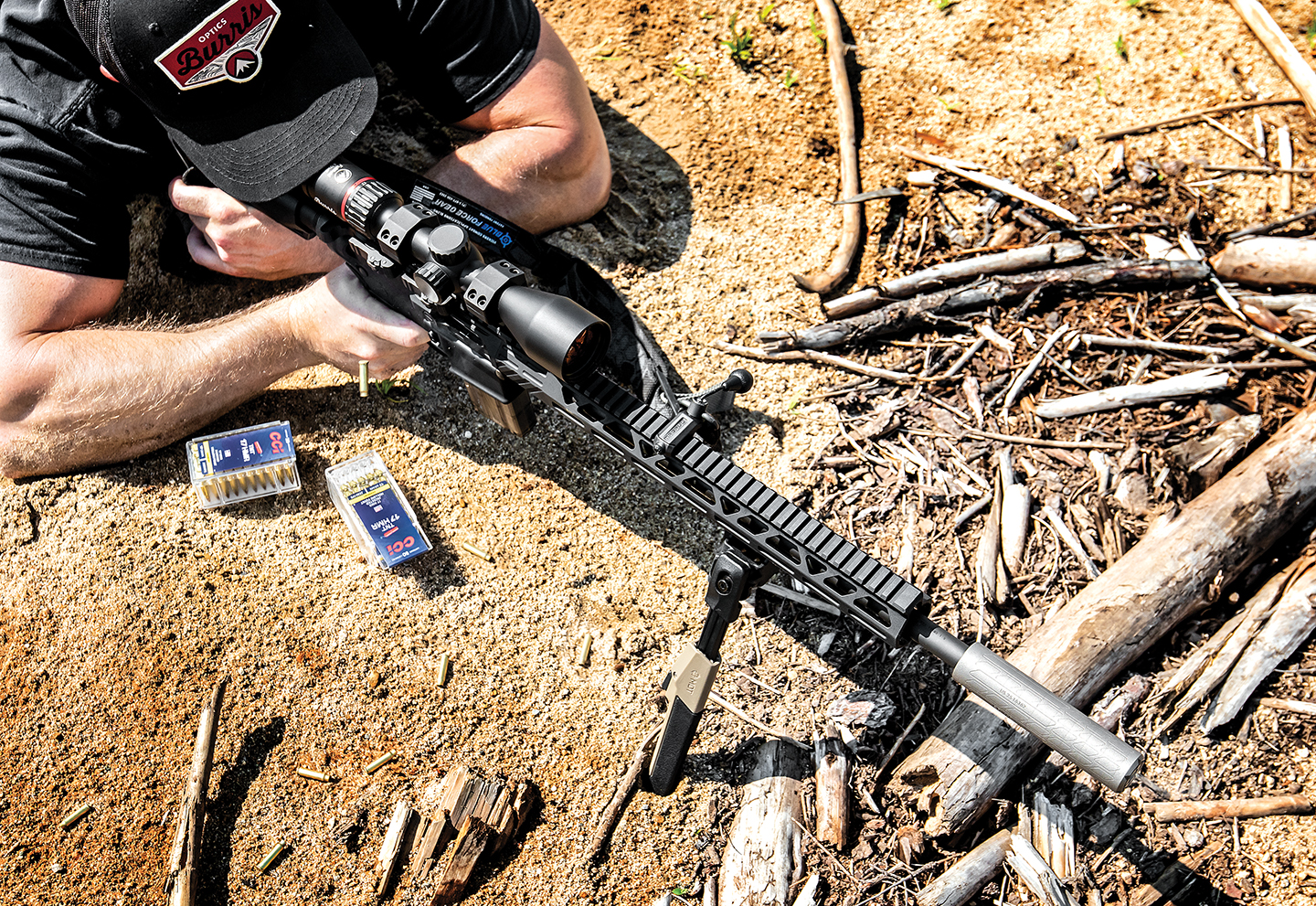
The .17 HMR “Rock Chuck” LAR-15 appears outwardly to be a typical AR-15-type platform in most respects. The lower is a standard forged aluminum RRA-15M found on many other RRA models with their proprietary deep winter trigger guard, Magpul MOE grip, and excellent, 2-stage Ultra Match trigger. The stock is the popular Magpul MOE SL-K 6-position model. The upper is a slab-sided .17 HRM A4 7000 series from billet aluminum, featuring a Picatinny rail on top and a lightweight, 15-inch M-LOK compatible, free-floated handrail forward. The handguard encloses an 18-inch, chrome-moly steel barrel with a 1:9 twist and standard birdcage flash hider forward with a 1/2×28 twist, which also allows the addition of many .22 caliber direct-thread suppressors. All the controls are standard AR-15, except for a forward assist, which is unnecessary, and no ejection port dust cover. RRA offers the Rock Chuck upper and buffer system separately, which will fit any standard AR lower. The only real giveaway that you are not dealing with a standard-caliber AR is the 10-round, translucent, clear plastic magazine from Black Dog Machine. The rifle came in a hard-side, latched RRA hard plastic case with lock and the typical literature.
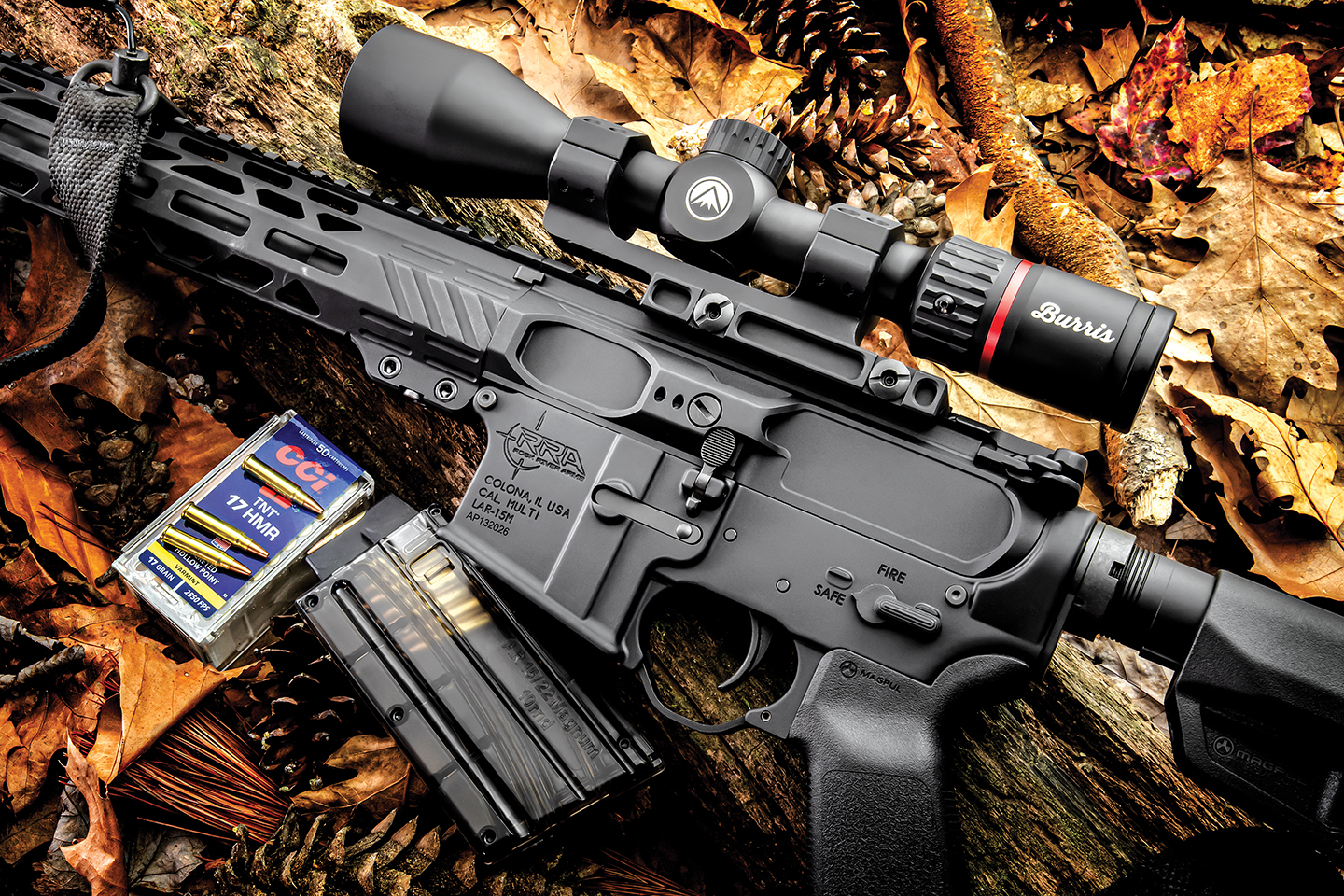
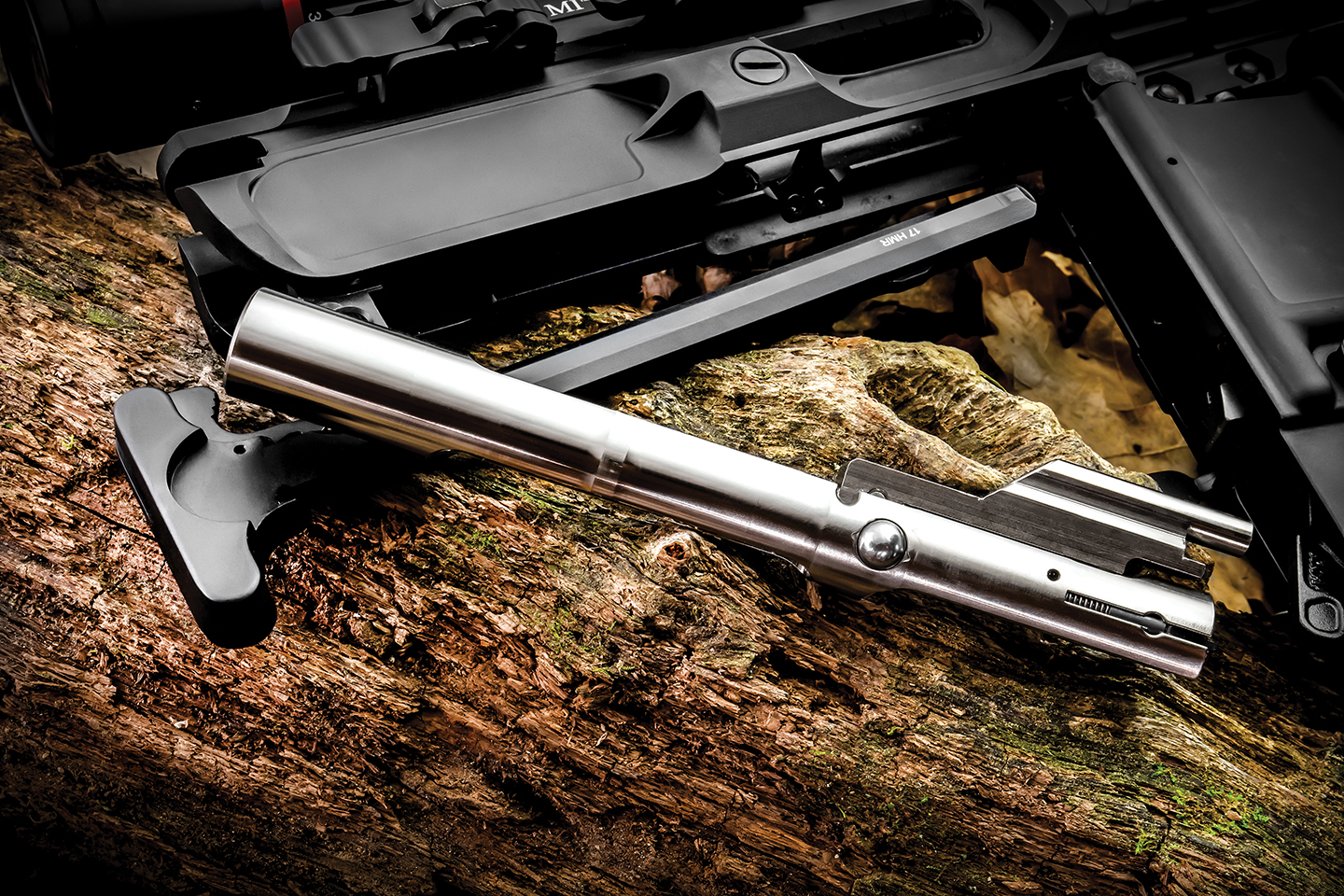
While the Rock Chuck’s outward appearance may look like a normal AR-15, it is deceiving because what happens inside is unique. Most rimfire semi-autos use a direct blowback operating system. In the case of the .17 HMR, however, this system will not work as the pressures are too high to use safely. The .17 HMR is essentially a wildcat cartridge, utilizing a .22 WMR case necked down to accommodate a .17 HMR bullet, which ranges from 15 to 20 grains at velocities exceeding 2250 FPS, producing over 26,000 PSI of chamber pressure. This presents an engineering challenge to keep the bolt closed long enough to allow the pressure to drop safely, while ensuring reliable cycling. RRA met the challenge by designing a system that works off both direct gas, like a typical AR, as well as a delayed bolt lock, similar to the roller-lock in the H&K 91 and other systems. The Rock Chuck’s gas tube is only two inches long and feeds a gas key that moves independently from the bolt carrier. As the gas key moves, at about 1/4 inch back, it pulls in two steel ball bearings from 3 and 9 o’clock in the 7-inch chromed bolt that fit into steel-reinforced recesses in the upper, allowing pressure to drop before the bolt unlocks and extraction begins. The recoil is managed by a proprietary plastic buffer and spring combination in the receiver extension. It’s all a bit of mechanical magic that reportedly took a few years and several tries to perfect, but RRA did it. If one were to ask why, the answer is simple: to create the ideal platform for exterminating varmints and small game.
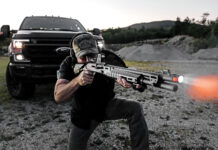
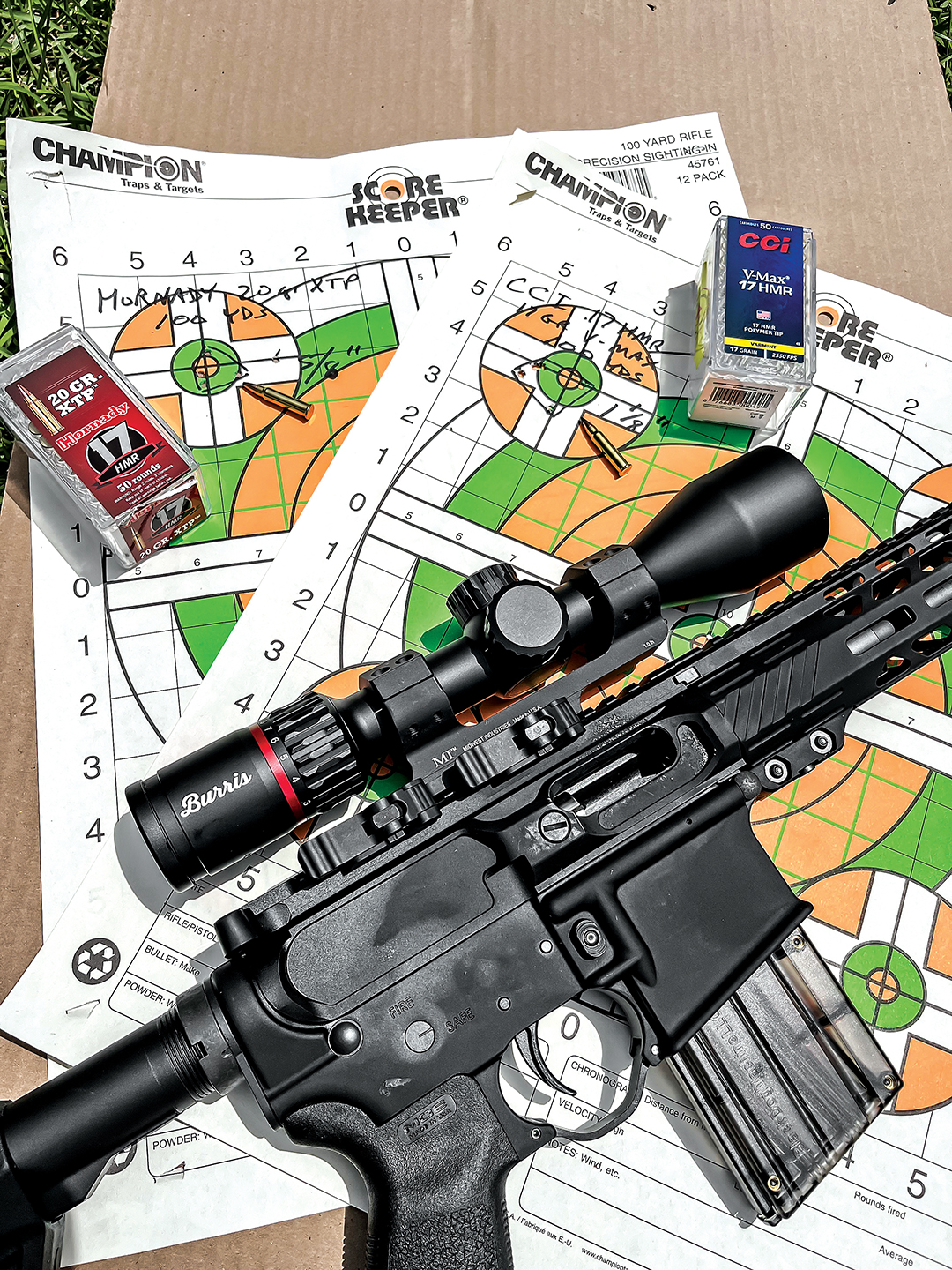
Range time with the RRA 17 HMR Rock Chuck was interesting. The 17 HMR was designed primarily to be an accurate, flat-shooting varmint killer out to ranges as far as 200 yards, well beyond that of a 22 LR. As fate would have it, my parents live near large tracts of BLM land in Idaho that are home to groundhogs, colloquially known as “whistle pigs”, present in large colonies. It is common practice among the locals to play the ballistic version of whack-a-mole on whistle pigs in the area. Having used a .17 HMR bolt-action rifle for this purpose, I could immediately see the advantages of a semi-auto for rapid, accurate follow-up shots. To ensure accuracy, my copy of the RRA Rock Chuck was generously equipped with a Burris 3-12×42 SFP Fullfield scope featuring a Ballistic E3 type reticle, mounted in a solid Midwest Industries QD mount. Ammo consisted of what I could procure locally, having no .17 HMR in my personal horde. Options were somewhat limited, consisting of 50-round boxes of 17-gr CCI V-Max, 17-gr Hornady V-Max, and 20-gr Hornady XTP. Ammo in hand, my first of three trips to the range with the Rock Chuck was primarily to sight in at 50 yards, having forgotten my bag rest. Despite having no support, I still achieved an acceptable group, so I was encouraged for my next few trips. Initially, reliability was spotty. I experienced five failure-to-eject type malfunctions, including three “stove pipes,” a double feed, and a particularly challenging “brass over bolt” issue, which required careful use of my lock blade to resolve. The rifle ran much better the more I shot it, to the point where malfunctions ceased to exist. On my first couple of trips to the range, accuracy was not all I had hoped for, with 5-shot groups averaging two inches at 100 yards from a bag rest on the bench. Part of this was due to me, as I had several called flyers ruining what would otherwise have been better groups, and part due to some significant mirage with occasional 10-mph wind gusts on a warm, eastern North Carolina spring day. The fact that the gun was new and not broken in likely contributed as well. Again, however, the more rounds I sent downrange, the better things got. The final range day proved the best, being cooler with morning overcast. Groups were in the 1.5” range, with the best being turned in at 1.2” by the CCI .20 gr V-Max, and a 4-shot group at 5/8” with the Hornady 20gr XTP. With more rounds behind the Rock Chuck, I’m confident this one is a sub-MOA performer.
If you are looking for an innovative yet familiar semi-auto platform in .17 HMR that will easily dispatch whistle pig and other similar varmints at ranges beyond a .22, the RRA Rock Chuck will fit the bill nicely. With proper shot placement, it could also take down mid-sized game, such as coyotes. The current MSRP for the entire rifle is $1,305, with the upper, magazine, and recoil assembly kit listed at $1,020 for use on your existing AR lower. Check it out at your nearest dealer, or for more information, contact Rock River Arms; Tel.: (309) 792-5781; E-mail: [email protected]; Web: www.rockriverarms.com.
SPECIFICATIONS:
Caliber: 17 HMR
Action Type: Delayed gas impingement
Trigger: Two-Stage Ultra Match
Rate of twist: 1:9
Barrel: 18-inch chrome-moly steel
Finish: Black anodized
Handguard: 15-inch M-LOK compatible
Buttstock: Magpul MOE SLK-K
Grip: Magpul MOE
Magazine capacity: 10 rounds
Sights: Picatinny optic rail
Overall Length: 33.50
Weight: 7.75 pounds
MSRP: $1,305