











Perfecting Gramps’ Recipe
By: Ben Battles
Simple, easy-to-do lever-gun modifications that pay big dividends
Despite COVID being in full swing, 2021 did bring some good news: Marlin was back! For lever-gun fans, including every member of On Target’s staff, this represented a ray of sunshine in dark times. A diamond shimmering in a goat’s rear, if you will. The icing on the cake was that the quality and craftsmanship were also back; Ruger’s purchase of the iconic brand was the best thing to happen to Marlin in quite some time, following its not-so-great tenure under the Freedom Group.
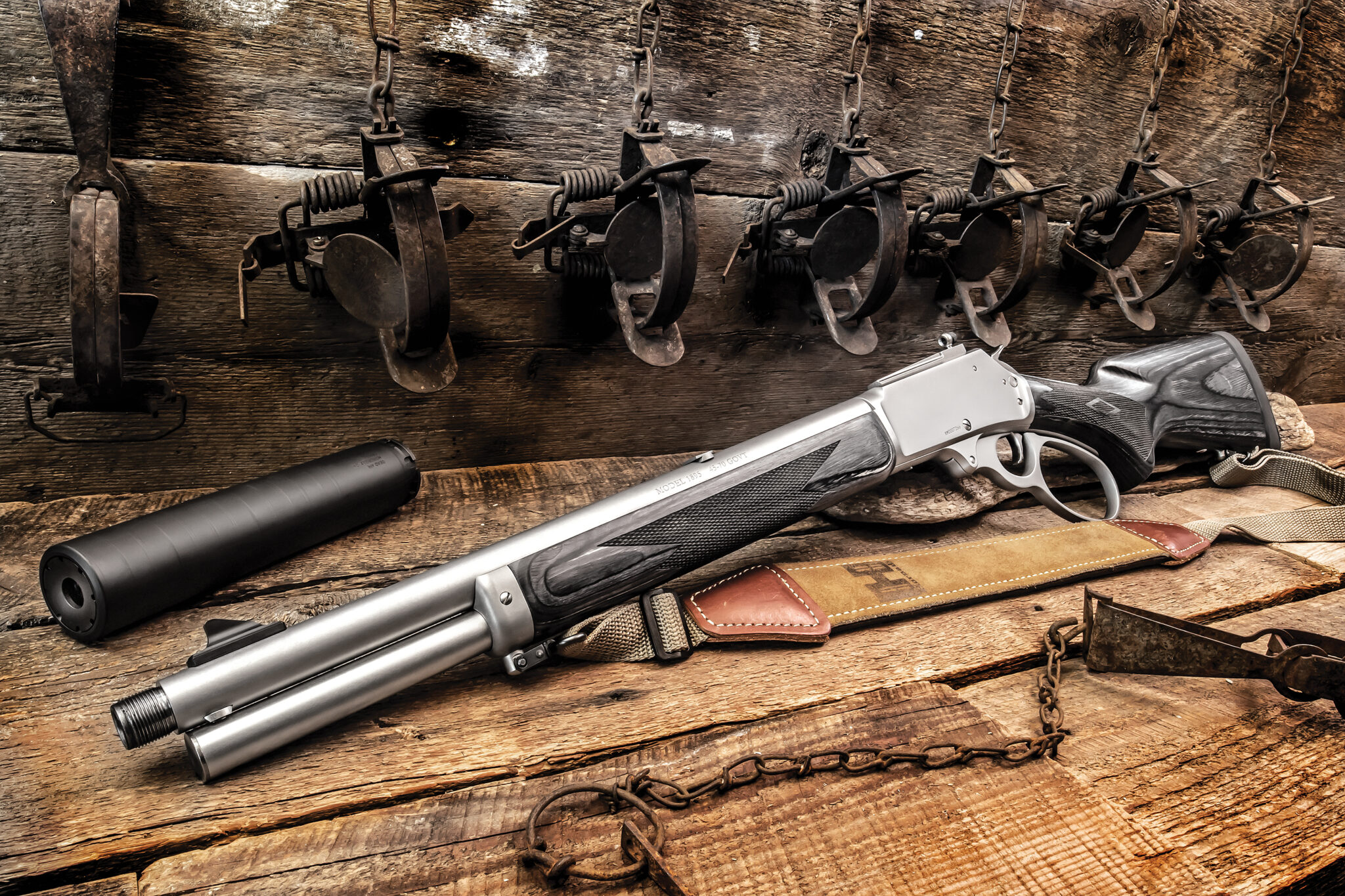
One of our ideal northeastern configurations amongst the current Marlin lineup—at least as an ideal starting point—is the 1895 Trapper model. With its brush-dozer .45-70 Gov’t chambering, weatherproof stainless-steel construction, handy 16.17-inch barrel, threaded muzzle, glove-friendly mid-sized lever loop, and excellent aperture iron-sight system, it checks a LOT of boxes for the big-bore lever-gun enthusiast. As is, it’s clean, svelte, and minimalistic. While these characteristics can be a draw for us, there are certain modifications we believe add to the rifle’s utility without diminishing its cowboy essence. People are making some crazy go-fast mods to lever guns these days, and while we think they make one of the best suppressor hosts money can buy, our tastes still trend towards a more traditional look and feel. In other words, we weren’t trying to turn a 1970 Ford F-100 pickup into a Formula 1 car with the below modifications, but we have made it comfortable cruising at modern-day highway speeds.
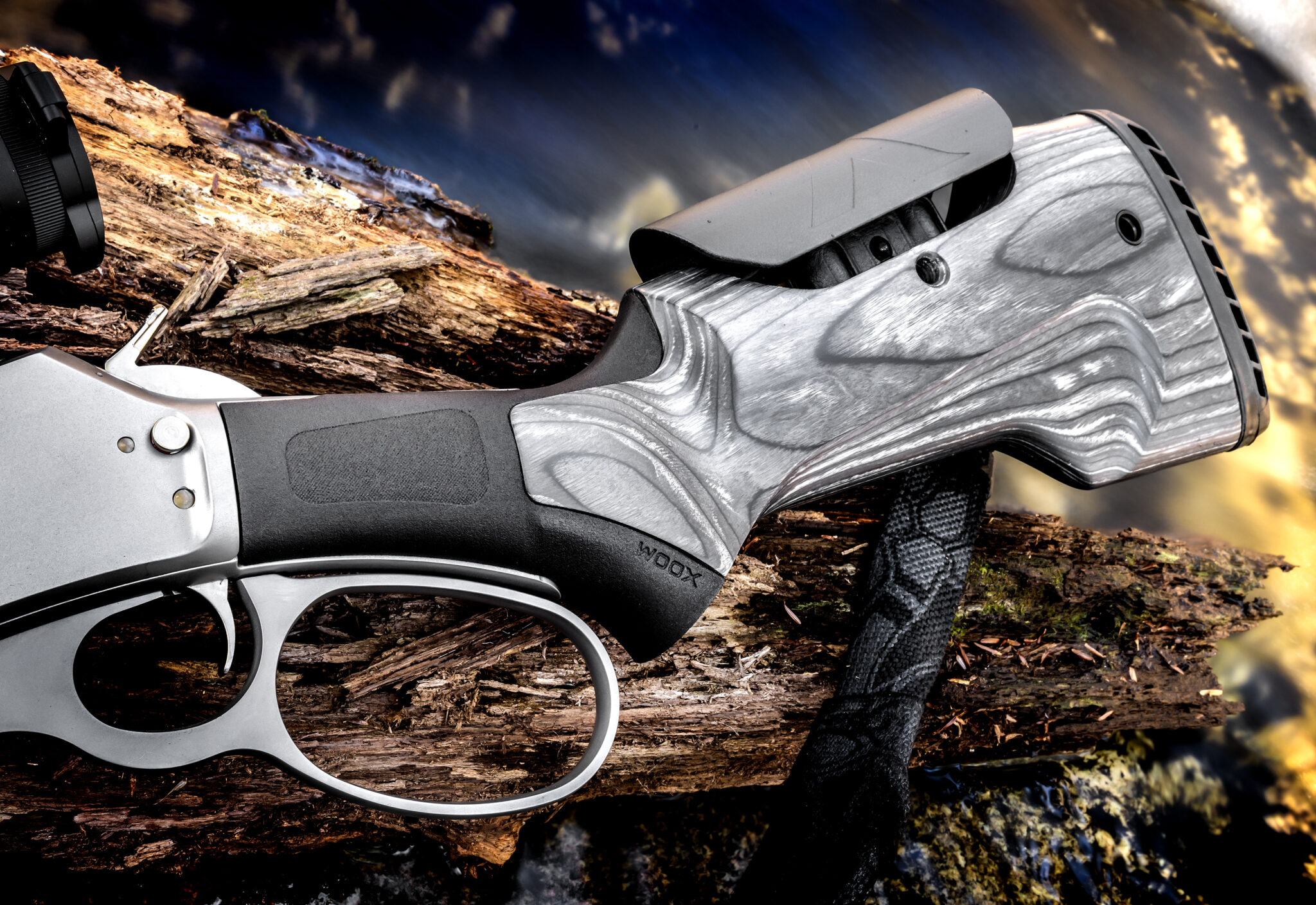
Woox Bravado Furniture ($599 to $799)
Woox is absolutely killing it in the wood-furniture realm. More accurately, the best (in our opinion) at pairing traditional and modern-day materials while also adding useful features applicable to modern-day trends. With applications ranging from AR-style to bolt-action rifles and everything in between, their dedication to old-world craftsmanship combined with new-world thinking sets Woox apart. They have the recipe down, and honestly, I’d hate to be one of their competitors these days. Though not inexpensive, Woox products are a prime example of getting exactly what you pay for.
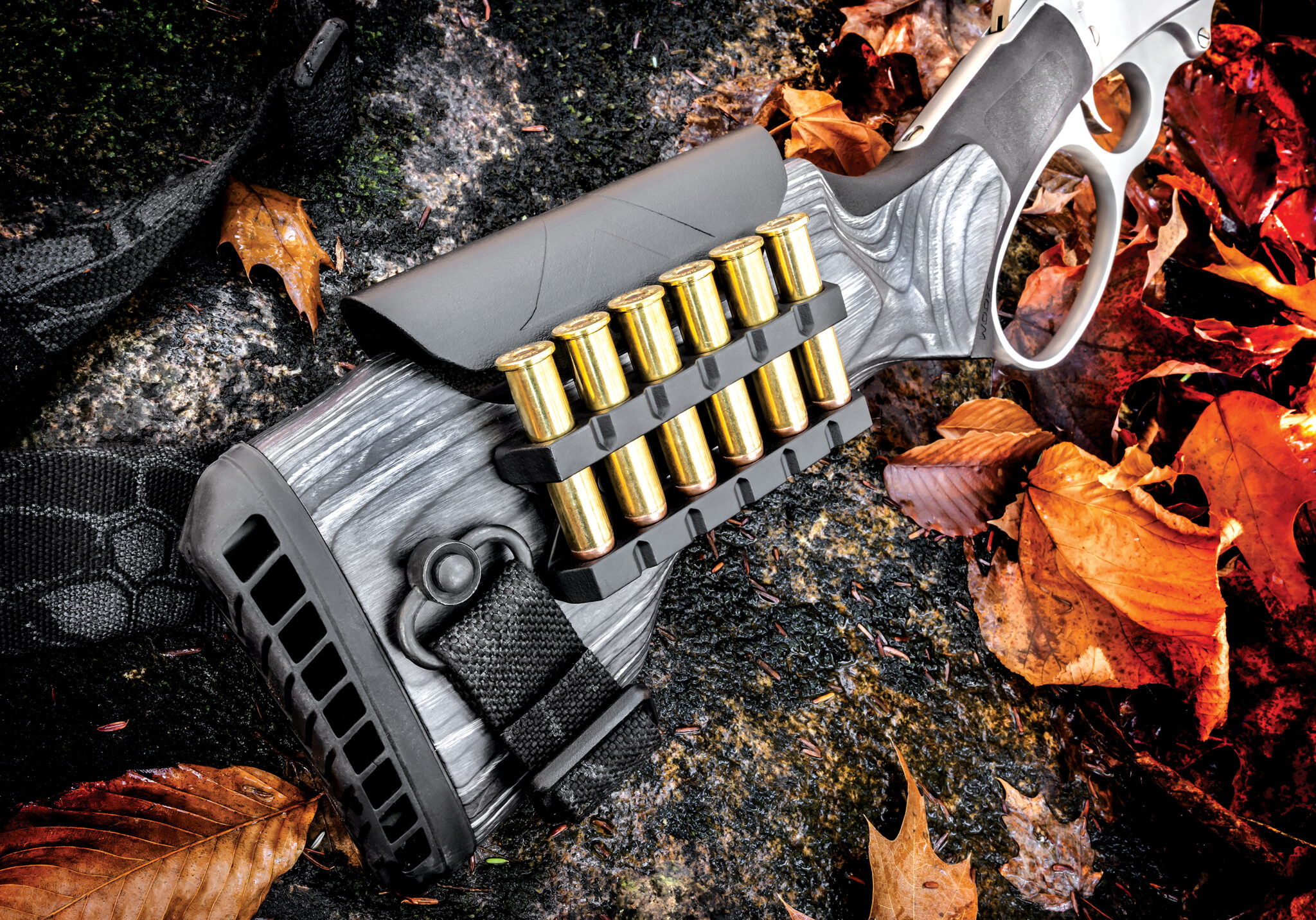
The new-for-2026 Bravado furniture covers lever-gun applications from Henry and Marlin, with furniture sets available in standard walnut or a more utilitarian grey laminate for $599, or a high-grade walnut that exhibits absolutely stunning figure for $799. Buttstocks and forends can also be purchased separately. We dig the factory grey-laminate look on the stainless-steel Marlin rifles and decided not to stray from those aesthetics with the Woox furniture set. However, where the factory Marlin furniture is about as spartan as it gets, Woox adds smart adjustability and adaptability.
Starting out back, the buttstock expertly marries wood construction with a textured-polymer grip/palm swell mounting fixture. Simply unscrew the factory buttstock and screw on the Woox one; installation couldn’t be more simple. Major advantages of the Woox Bravado include a five-position adjustable polymer cheek riser to fine-tune eye-to-optic alignment, QD sling-swivel cups on either side for legitimate, rock-solid sling mounting, and an inlaid two-slot M-LOK panel on the right side that serves as an ideal location for a spare-ammo quiver. Under recoil, the company’s proprietary Ultralight ventilated recoil pad also goes noticed as a definite upgrade from the factory solid-rubber piece.
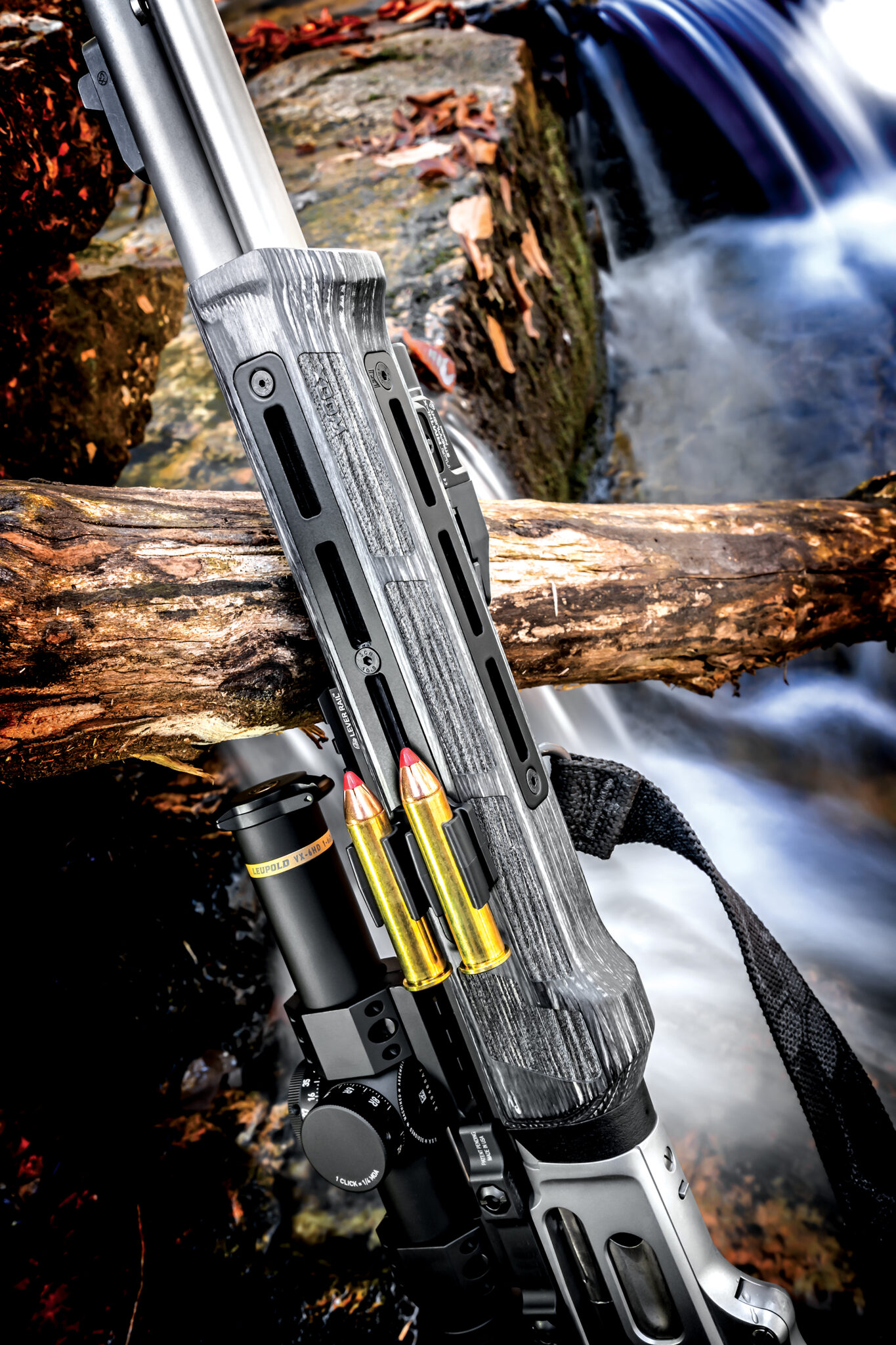
Moving forward, the Woox forend features laser-etched texture panels, and like the buttstock, incorporates polymer at the mounting points. The laminate portion dips down front and rear to help keep your support hand from leaving the chat. Four-slot M-LOK rails are present on either side, which would work well for a white-light illuminator for the hog hunter or a forward-mounted ammo quiver, and a three-slot rail underneath, which we like the option of for mounting a bipod or ARCA rail for shooting off a tripod.
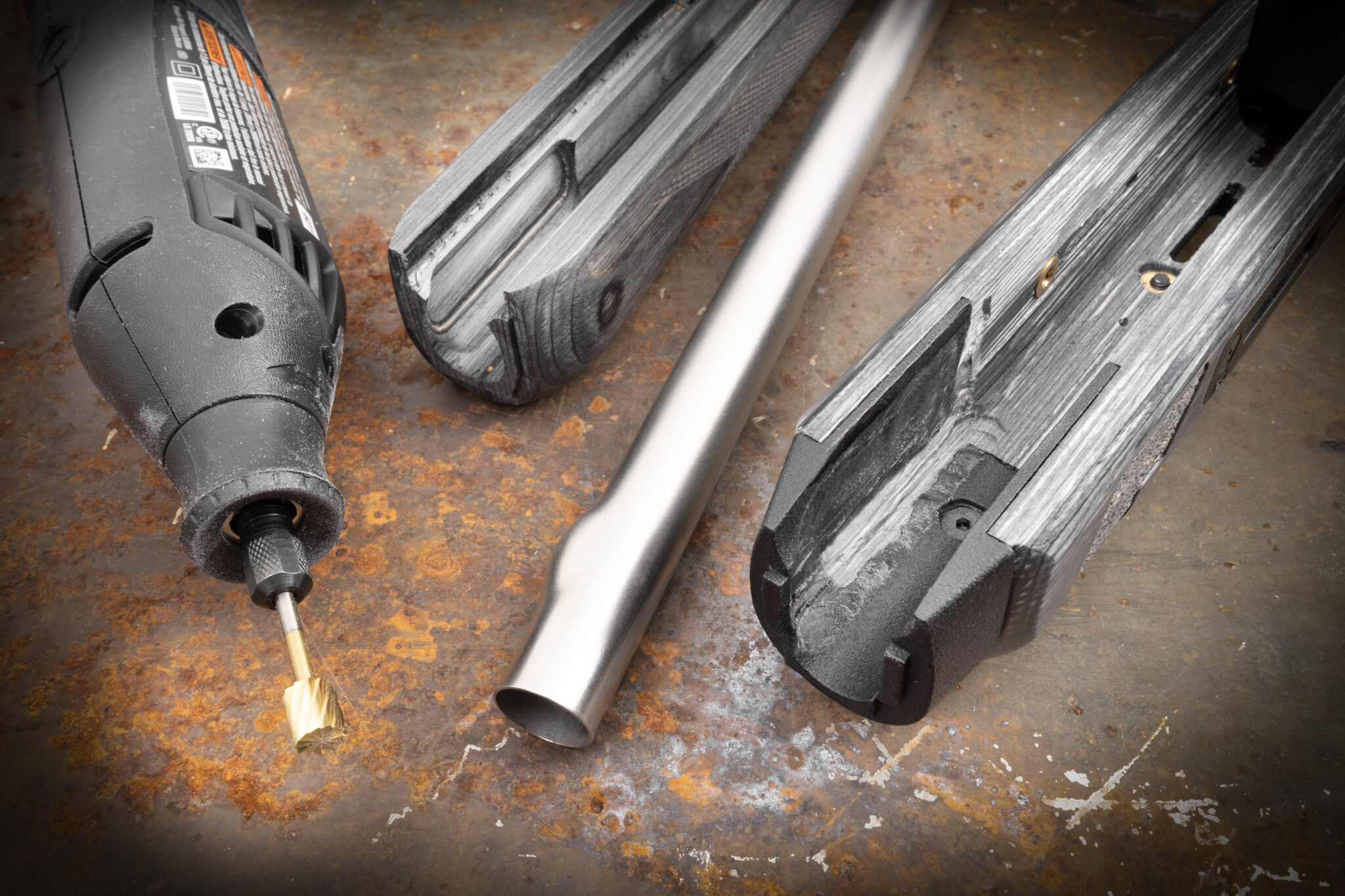
Fitment of both the buttstock and forend was spot-on perfect and devoid of proud areas or gaps; however (and unfortunately), this forend is not compatible with 1895s like ours that have the bulge at the base of the magazine tube … despite what the website fitment guide states. Using the factory handguard as a guide, the fix is about 5-10 minutes worth of Dremel tool work to carve out the necessary depression in the handguard. However, (and also unfortunately) this will void the factory warranty. To us, it was well worth the hassle.
Overall, the Woox furniture provided a superior front and rear grip, better control, better recoil dampening, a better shooter-to-rifle fit, and options for accessories. All wins. For more information, contact Woox: Tel.: (828) 405-1580; Web: www.wooxstore.com.
XS Sights Lever Rail & Ghost Ring Sight Set ($153.74)
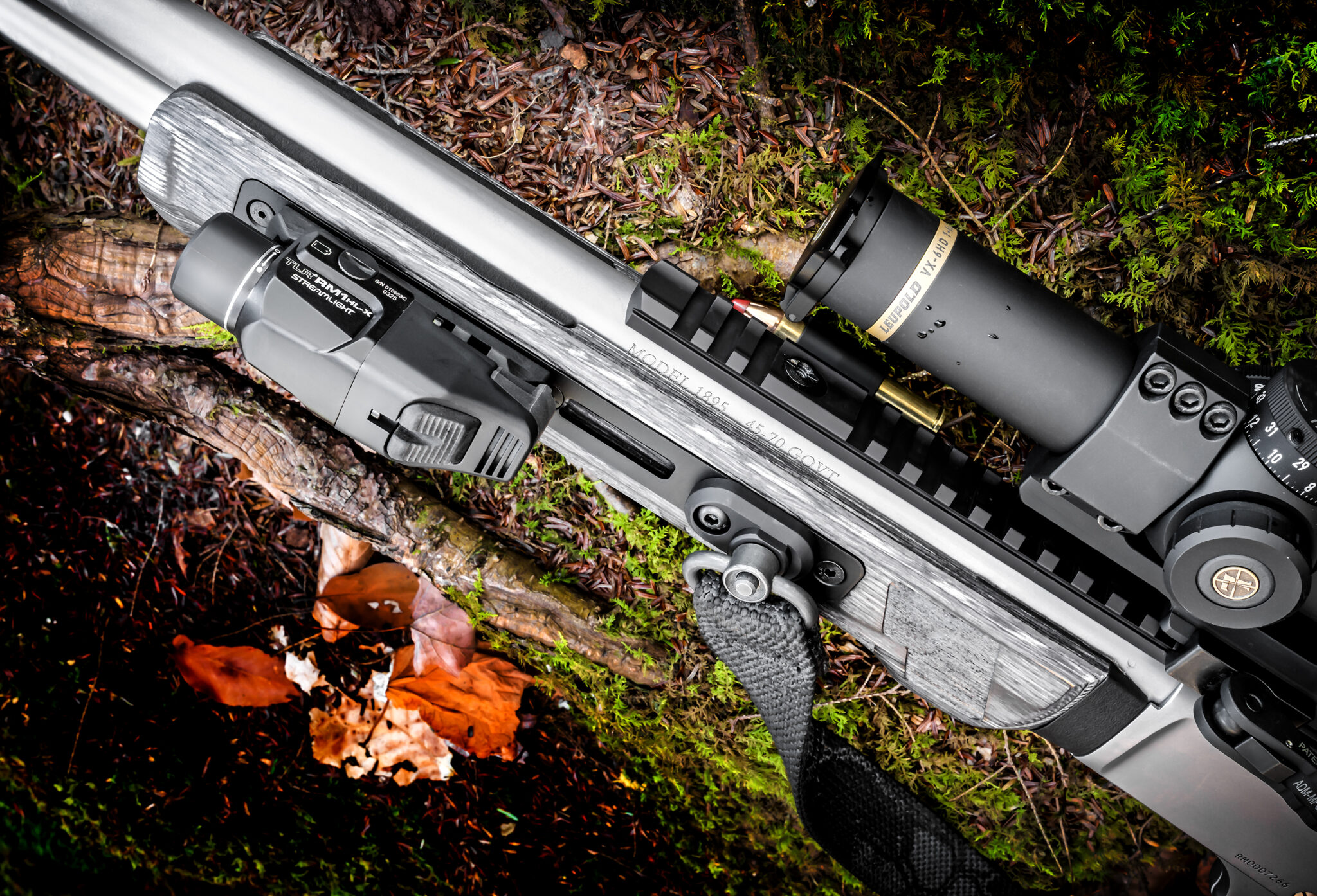
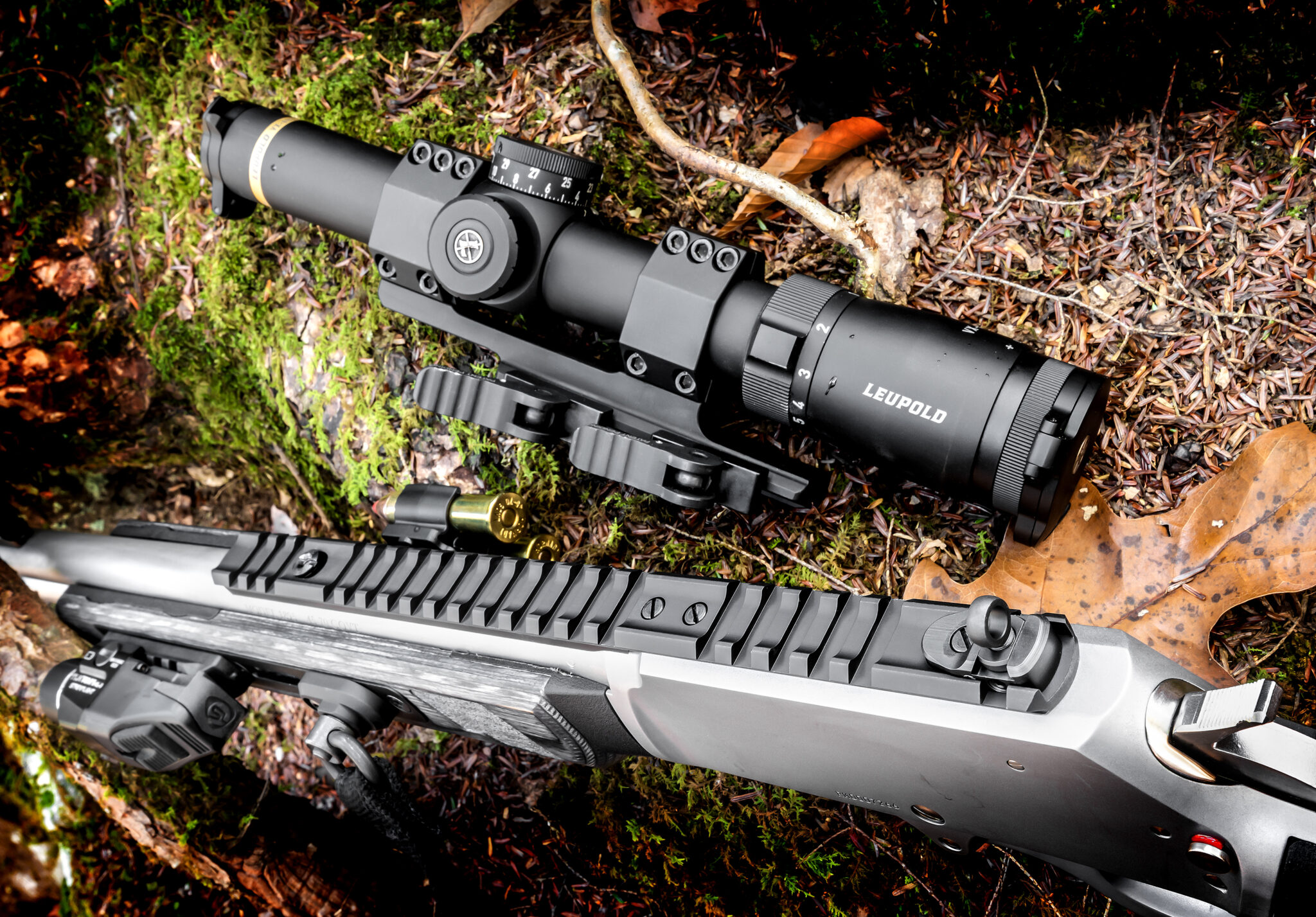
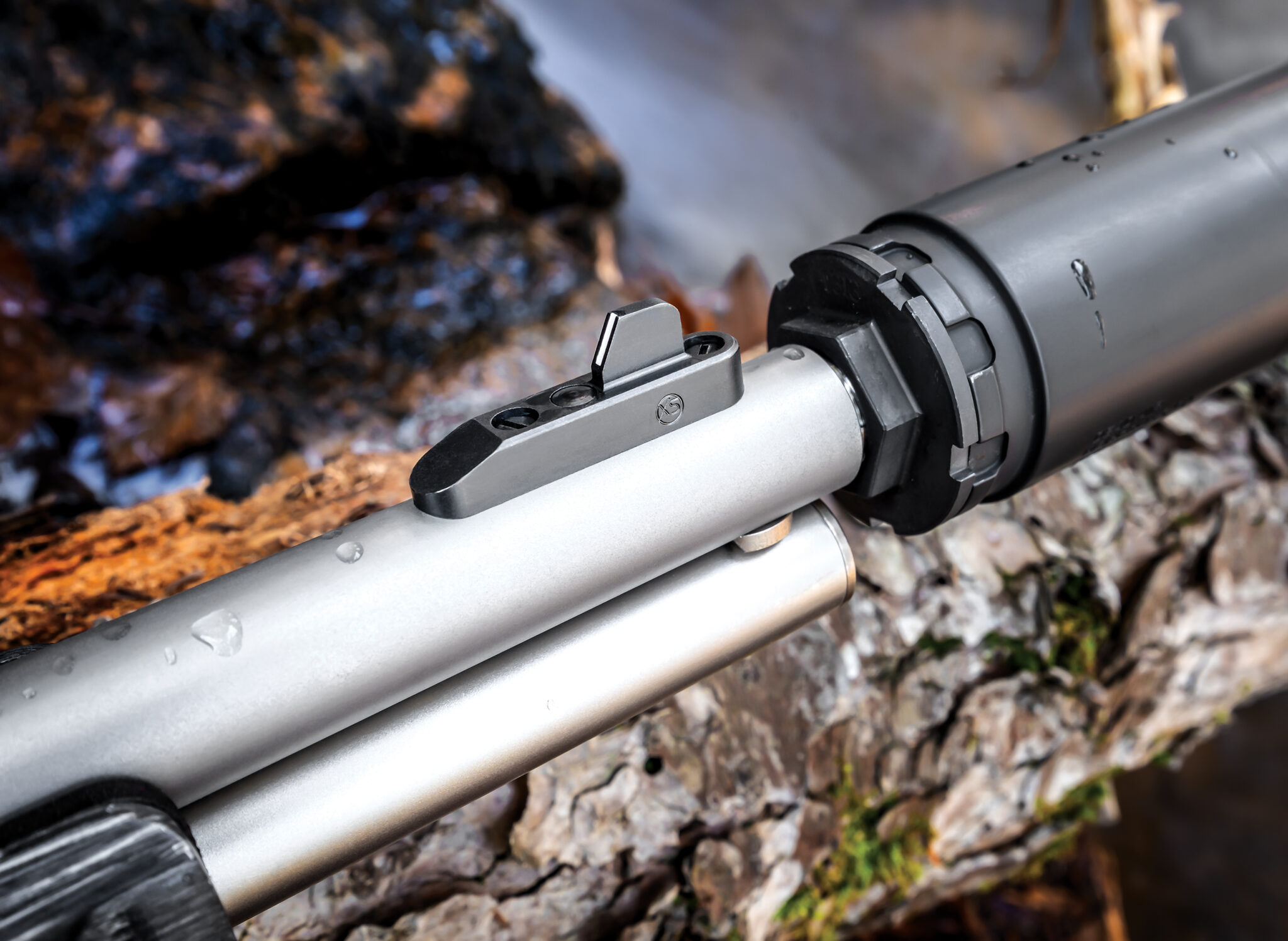
If you’ve been around lever guns long enough, you’ve surely heard about (or used) the XS Sights Lever Rail optic mount/ghost-ring sight set. These products are time-tested, highly proven, and — in our lengthy experience with them — are highly effective. They’re as sure as a sure thing gets in the gun world. Available for the Marlin 1895, 336, and 1894 models, as well as set sights and/or optics mounts for most other popular lever-gun platforms, the XS kit pairs an extended aluminum, hard-coat-anodized Picatinny optic rail with a fully adjustable ghost-ring-aperture rear sight — complete with two separate aperture sizes (0.191 and 0.230) — and a white-stripe ramp-style front sight. The system, as a whole, is well engineered, reliable, and tougher than woodpecker lips. Installation is foolproof, and XS provides all the hardware and threadlocker to get the job done. The length of the Lever Rail optic mount opens the door to using a standard magnifying optic, an extended-eye-relief “scout” scope, a red dot, or a red dot/magnifier combo. We chose to mount one of our proven and preferred LPVO optics—the Leupold (www.leupold.com) 1-6X VX-6HD. While not inexpensive, there’s no buyer’s remorse with this one (unless it necessitated missing a mortgage payment). We mounted the Leupold in an American Defense one-piece QD mount for two reasons: 1—it provided the necessary height to clear the rear aperture sight, and 2— we wanted the quick-detach capability to have the option of quickly accessing the irons if the optic became hopelessly occluded by rain, snow, mud, or whatever the case. With the adjustable cheekpiece of the Woox buttock, we were able to dial in a perfect cheek weld and eye alignment with the scope.

For over two decades of hard use, we’ve had variations of this same XS system on a hard-recoiling Marlin 1895M in .450 Marlin and a compact 1894P in .44 Magnum, both with zero issues. Nothing has shot loose, the irons have held their zero, and the components look no worse for the wear. For those reasons and more, this has become our preferred lever-gun sighting system. For more information, contact XS Sights: Tel.: (888) 744-4880; Web: www.xssights.com.
All told, the simple modifications we made to our 1895 Trapper paid tangible dividends in the performance, adaptability, and “traditional-but-enhanced” aesthetic departments. We can’t say for sure, but we’d hazard a guess that these are all components both the Fudd-traditionalist and tactical-ninja lever-gun groups can find common ground on.